

What to Consider Erecting Heritage Scaffolding

Heritage properties are special, and that means they have special requirements during building, cleaning, and restoration processes. To access a heritage house or heritage building for work, site access that keeps workers safe and protects the heritage property is essential.
Scaffolding can be erected to meet all these requirements. Freestanding system scaffolding is one option. Scaffolding can also be installed with tie-ins to the side of a building if the building is stable enough. Temporary shoring systems may also be required for supporting some buildings.
It’s important to work with a scaffolding contractor who understands the needs of heritage properties. At Johnson Playfair Scaffold, our experience in heritage brick restoration and stone restoration means our team has installed scaffolding on many heritage properties
Discerning homeowners, cautious architects, heritage protection committees, government standards, and armchair conservators on city streets — these are all some of the parties you may need to answer to when completing a heritage restoration on a private or public heritage property.
Independent or Attached Scaffolding?
With heritage scaffolding, you will typically look at two options for scaffolding support. Depending on the ground type and stability of the building, you may want or need your scaffold attached to the building with tie-in points — anchors to the walls of the building. This may necessitate minor masonry repairs to the walls once scaffolding is removed or during the removal process. At Johnson Playfair, our team has the masonry expertise and cross-training to complete these repairs on site. Depending on the type and condition of the building, repairing a few attachment points may be a very minor concern in the scope of other restoration work required.
At other sites, the walls may be too fragile for wall attachment points, or the building itself may have insufficient stability to support scaffolding before the commissioned repair work is completed. For these sites, you’ll need freestanding scaffolding that is independently supported. This can be done with standard system scaffolding if height and width ratios remain 3:1 or below, but can be achieved through other engineering [internal link to engineering article] to properly weight a scaffold so it’s self-supporting. A proper scaffold installer can also help you devise alternate solutions, like smaller access platforms with reconfigurations as needed to get to difficult areas.
Narrow Entries and Custom Sizing
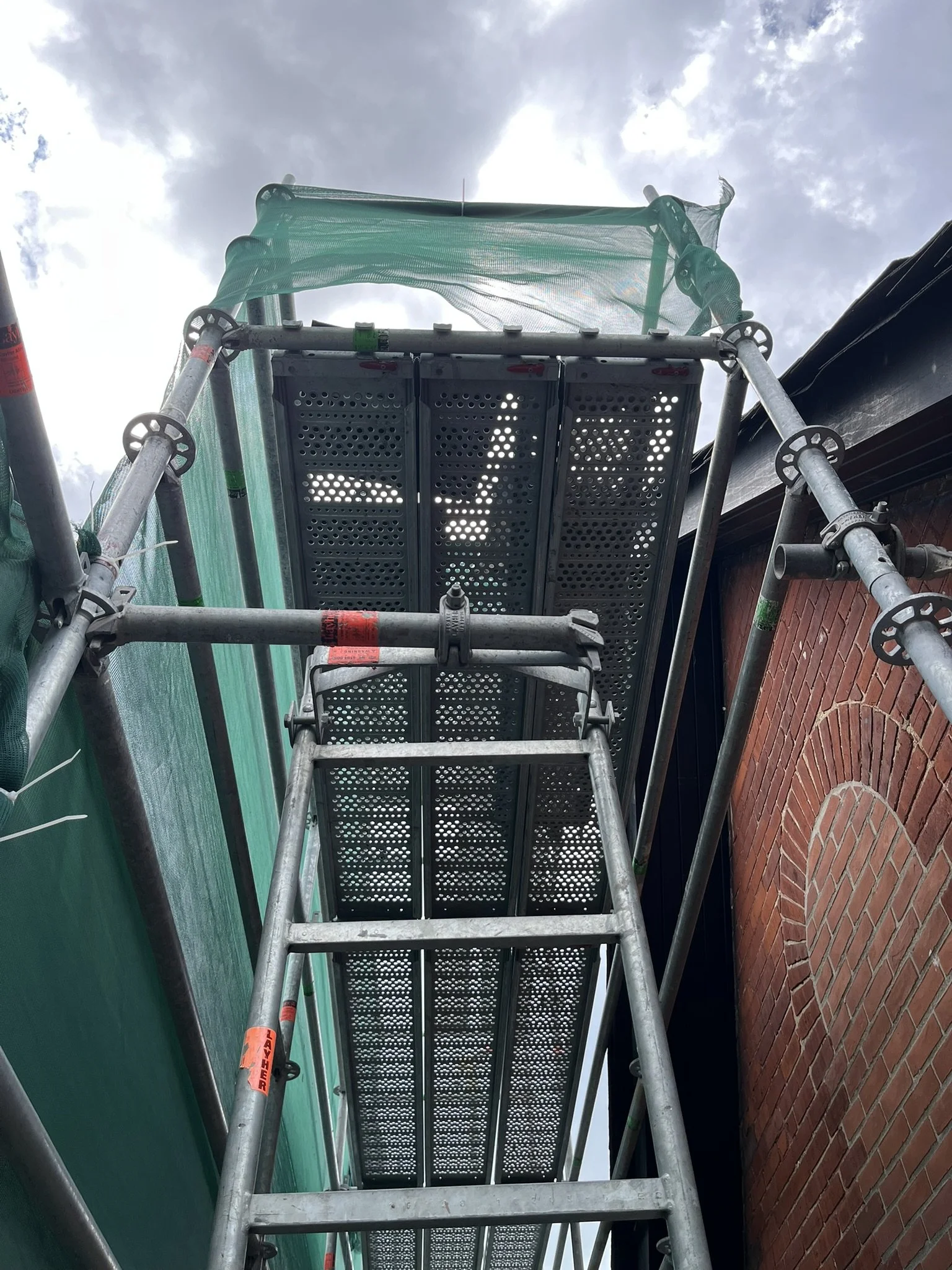
Heritage buildings can come with custom problems. Unusual architecture, or buildings that a city has grown up around, may have areas that are difficult to access — or the whole building may be an area difficult to access. There may be other heritage structures close by not included in the restoration work that need to be protected, large old-growth trees, or public sidewalks or pedestrian walkways. Narrow scaffolding may be required, or unusually shaped access platforms.
Tube and clamp scaffolding can be customized to provide access to narrow areas, or specialized shapes where architectural elements are rounded or angular. Tubes can be cut to size when required to construct irregularly sized scaffolding.
Support Shoring and Scaffolding
Heritage buildings may be irreplaceable, but many of them don’t receive proper restoration work until they’re on the verge of collapse. In those cases, restoration contractors need to ensure stabilization of the building for structural work, excavation, or partial demolitions.
Temporary shoring can be used to provide structural support from the ground up or from foundations to upper floors. Collapses can cause danger to the heritage structure, neighbouring buildings, workers, and passersby. Shoring helps stabilize the building until new walls are built or existing walls are repaired to be able to support the building themselves. Soldier piles, or vertical steel beams, are the most common type of shoring used on existing heritage structures.
Temporary shoring also works well for staged construction, as it can be removed or reconfigured to match with the project stages.
Crew Safety on Heritage Restorations
Not all heritage properties have been well-maintained and just need some brickwork tinting or cleaning on a heritage facade restoration. Sometimes properties are crumbling and unstable and require a lot of work to get them back to their original glory. Years of poor maintenance, vacancy, or limited repair budgets take their toll on many heritage properties. Or a property may have sustained storm damage or damage from neighbouring construction.
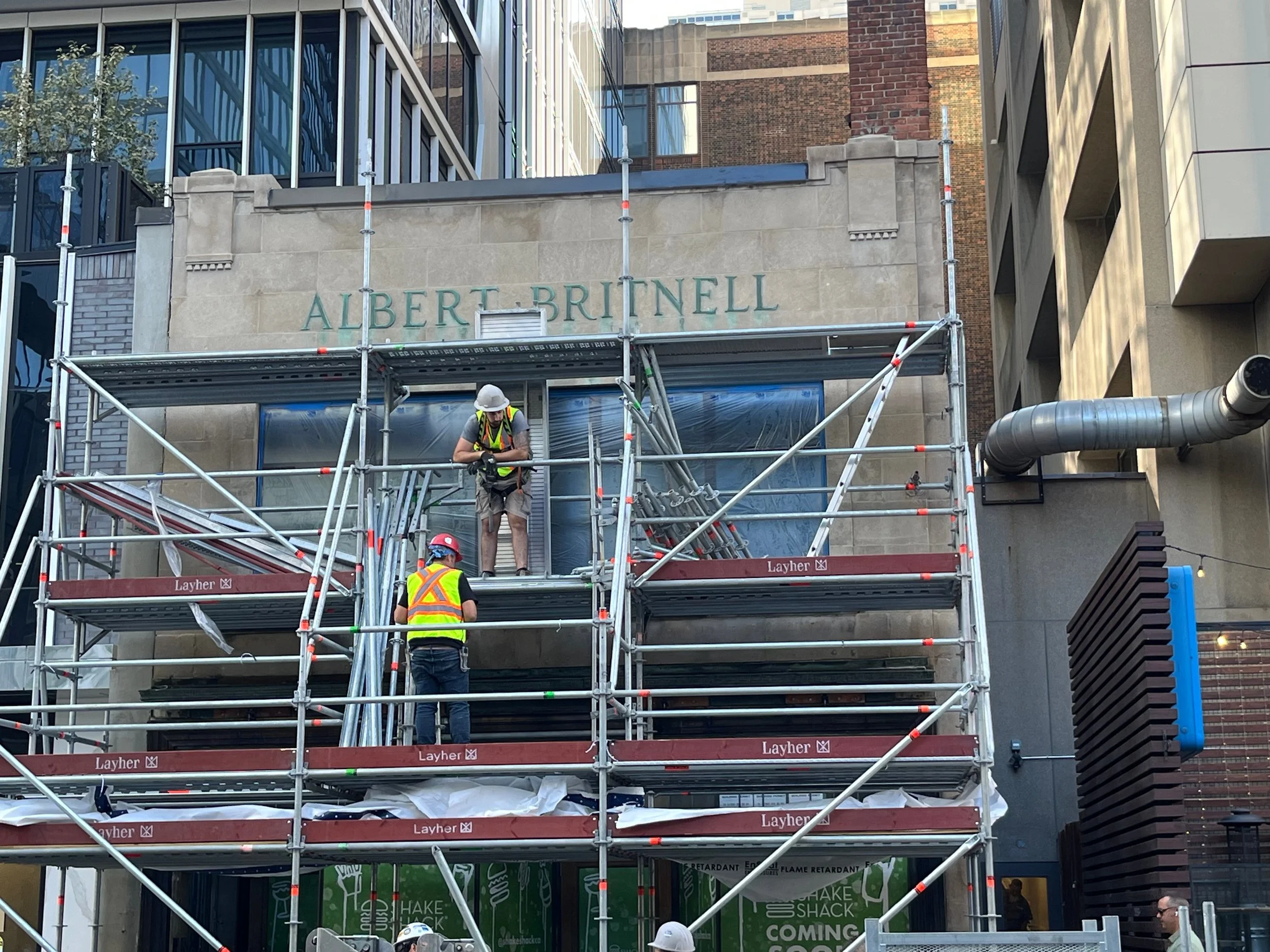
For these jobs, crew safety needs to be considered centrally in site access too. Scaffolding may need to be self-supporting if a building is too unstable. Access to a roof or chimney may not be safe when it may otherwise have been in a properly-maintained building. Scaffolding ensures stable access for crews without relying on climbing or ladders.
Consider using electric material hoists, gin wheels, or stairways instead of ladder access on these sites, especially if a high volume of materials need to be transported to upper levels.

Site Fencing and Tarping
Site fencing is also a frequent necessity for heritage building restoration. For public buildings, fencing may be required to protect areas that remain open to the public, or busy sidewalks. At private residences, fencing can prevent unauthorized access or close off open excavations for the protection of workers or residents. Since most commercial and public heritage buildings are in well-trafficked areas, site fencing needs extra consideration. Residential clients may also want to keep ongoing work out of view from prying eyes until a project is complete.
Tarping or dust netting can also provide additional privacy on a site, as well as weather protection for crews completing work in colder and windier months. Dust netting is often a requirement for messy work like masonry restoration in a busy downtown area or tightly-packed residential neighbourhoods.
Wraparound Restoration Services
For many scaffolding jobs, last-minute touchups to the work the scaffold was installed for are expected, but especially with restoration work. Masonry or paint touch-ups, or a final cleaning, may be necessary while scaffolding comes down. Larger-scale repairs can leave dust and dirt, or holes from scaffold tie-ins may need to be filled in. Depending on the job and scale, this may mean staging scaffold dismantling so that part of a scaffold remains accessible to complete last-minute work, or having other trades and scaffolders on site at the same time so the tradesworkers can complete the repairs concurrently.
Having a crew with the expertise to complete some of this last-minute work themselves can help save your client time and money.
Scaffolding Heritage Restoration Services
Heritage buildings need extra care, and that means hiring a contractor who takes extra precautions. Experience working with heritage properties means you’re working with someone who understands sensitive materials, being careful with lifting heavy equipment in and out, and risks to workers or the public on fragile sites.
Both private and public clients take extra care in selecting a restoration contractor who loves heritage buildings, knows historic construction practices, and wants to restore these properties with full consideration of their history and uniqueness. A careless approach to site access or scaffolding providers could cause unnecessary damage along the way — it’s important to choose an access partner who works with the same respect you have for the site.
Need scaffolding for a heritage restoration?
