

Do You Need Permits for Scaffolding in Ontario?
Guide to When You Need a Scaffold Permit in Toronto, the GTA, and Ontario
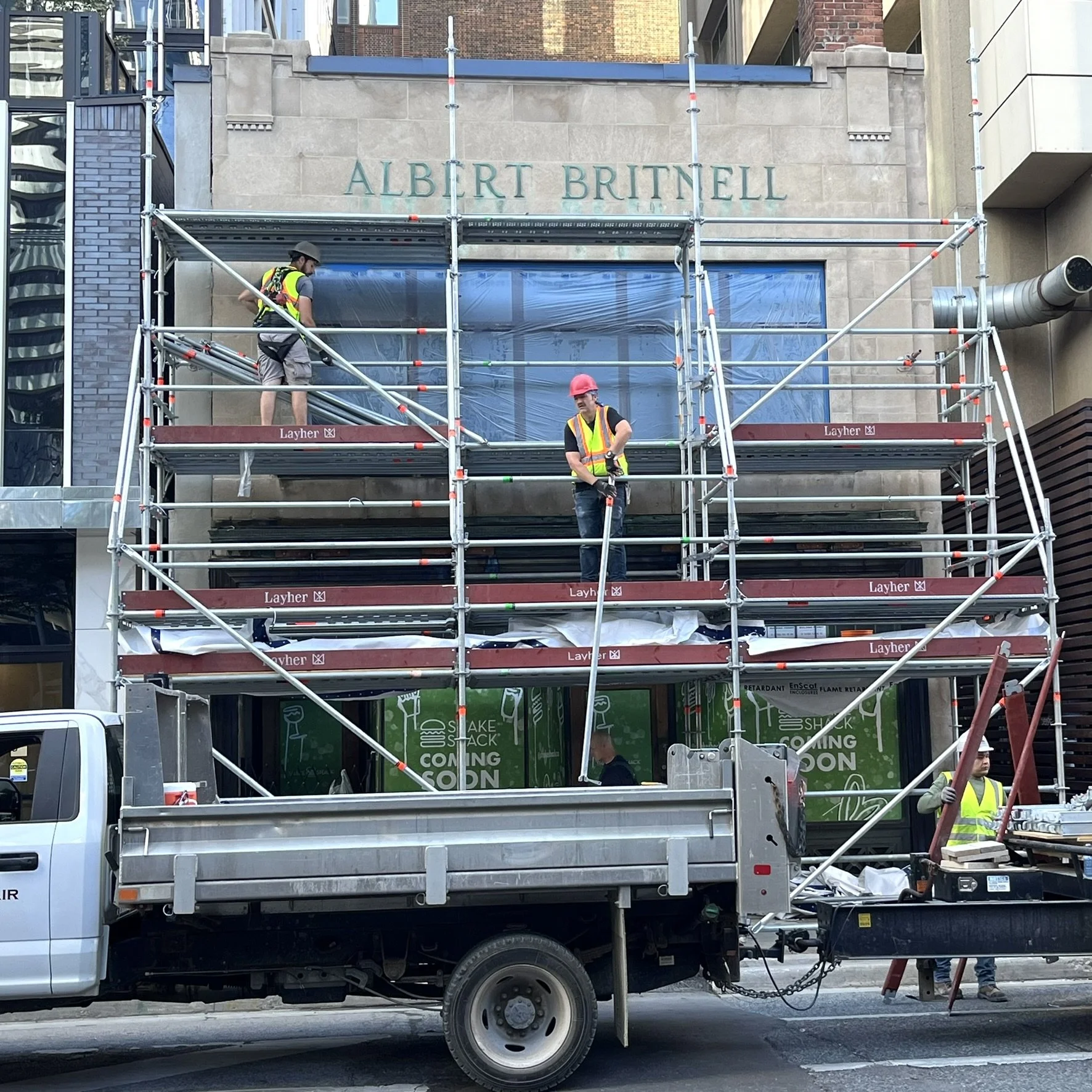
It’s time to schedule scaffolding installation for your project, but when planning logistics, you’re wondering: Do you need a permit for your scaffold in Toronto? The answer is: sometimes. Read through our guide and we’ll help you understand if you need permits for scaffolding in Toronto, Peel, Durham, Oakville and other municipalities.
When Do You Need a Permit for Scaffolding?
For residential scaffold installations taking place entirely on private property, no permit is required. Engineering on your scaffold may be necessary if the scaffold is above 15 metres in height (or 10 metres for tube and clamp scaffolding) — more about this here [link to engineer article].
The slight exception to this is when the scaffold is actually encroaching on the road allowance on your property.
How much is the road allowance? Well, it varies by property — some small downtown Toronto lots are as little as one foot, while suburban lots tend to be around the first two metres of your front lawn. The two metre calculation typically holds across Ontario, where roads were originally surveyed with a 66 feet, now defined as 20 metre, width. In Toronto, calling 311 can often help clarify how much of your front yard is considered city property, or you can hire a land surveyor to find the exact boundary of a front yard.
If scaffolding will extend onto the road allowance, the same occupation permit as for a sidewalk is required.
However, if your scaffolding, or accompanying hoarding or fencing, extends onto a public roadway or walkway, you will certainly need a permit. This applies even for short one-day or one week jobs.
What Type of Permit Do You Need for Scaffolding?
A street occupation permit is the type of permit needed for scaffolding in Ontario. These can be obtained from your municipality: Toronto, Peel, Durham, Oakville, etc.
Who Applies for a Scaffold Permit?
Normally the contractor or builder overseeing the construction work will apply for any occupation permits required for scaffolding (along with any other street occupation permits and building permits). However, your scaffolding rental company can assist with permit applications for a fee.
How to Get a Permit for Scaffolding
Do You Need a Permit for Scaffolding in Toronto?
If you need a permit for Toronto scaffolding installation, you apply through the city’s Transportation Management department.
Occupation Permitting Costs
For 2026, the City of Toronto’s permit costs for scaffolding, hoarding, and other site protection on a sidewalk are:
In a construction hub: $1022.72 plus HST, as well as $34.60 per linear metre for the lifetime of the project
In all other areas: $818.19 plus HST for the application, plus $27.66 plus HST per metre per month and $9.22 plus HST per square metre per month
Varying rates apply if the construction extends onto the road itself. Additional charges from a builder or contractor may apply for application preparation.
For applications, drawings and a traffic management plan are required, along with an application form, a certificate of liability insurance for $2 million naming the City as co-insured, and the required fees. The applications are submitted by fax or email.
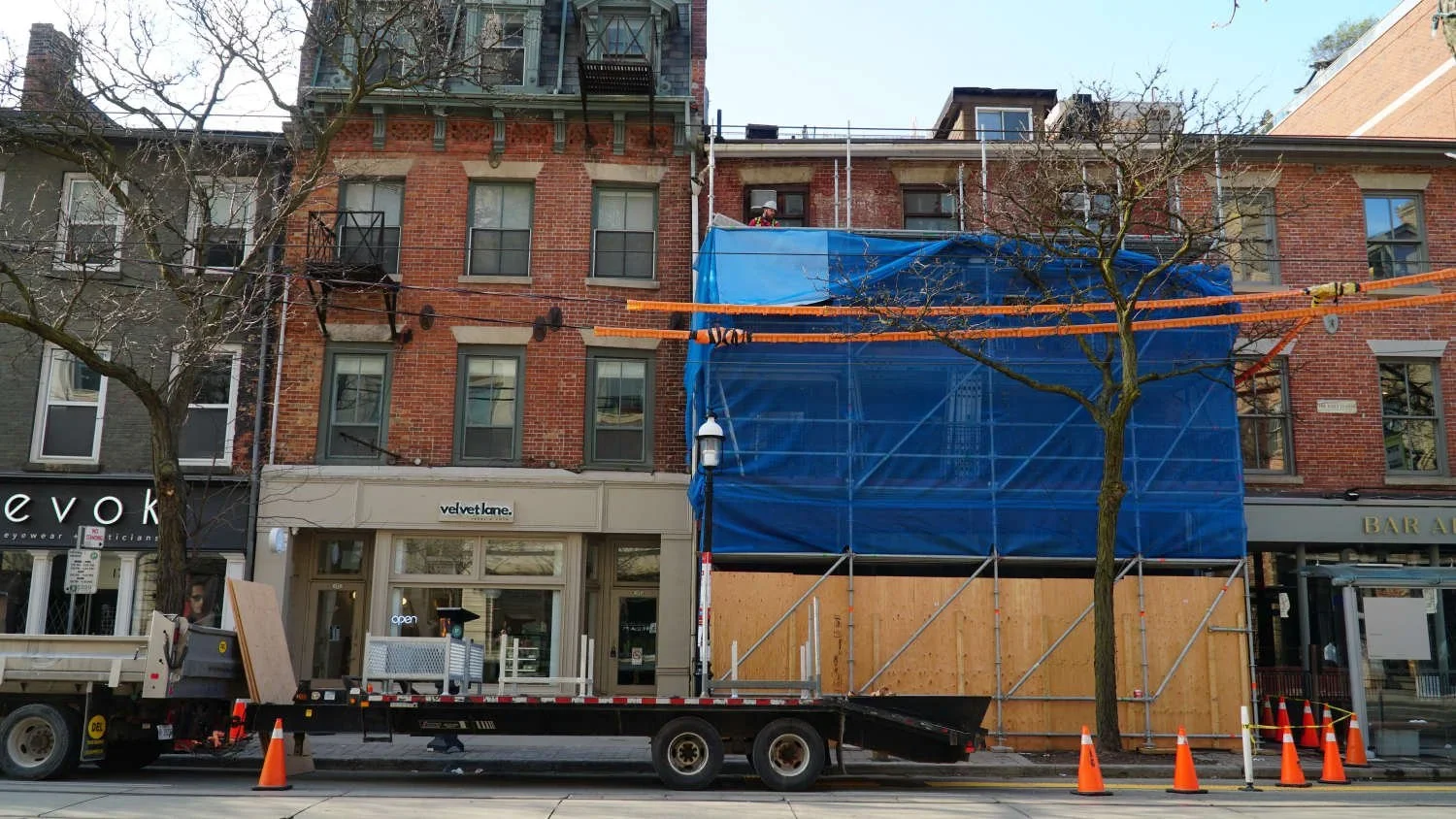
Architectural drawings are ideal to ensure all required specs are included, but anyone submitting an application should carefully review the requirements on the city website, including a scale, tie-in measurements, physical features of a site, parking spaces, etc.
Do you need permits for scaffolding in Oakville?
The city of Oakville has similar permit requirements to Toronto.
Do you need permits for scaffolding in Mississauga?
The city of Mississauga has similar permit requirements to Toronto; the type of permit required is a Temporary Road Occupation permit.
Do you need permits for scaffolding in Durham?
Durham Region regulates permits similarly to other GTA communities. Applications are submitted through your specific municipality (Ajax, Oshawa, Markham, etc.), unless the construction is located on a regional road.
Do You Require a Right of Entry Permit for Scaffolding?
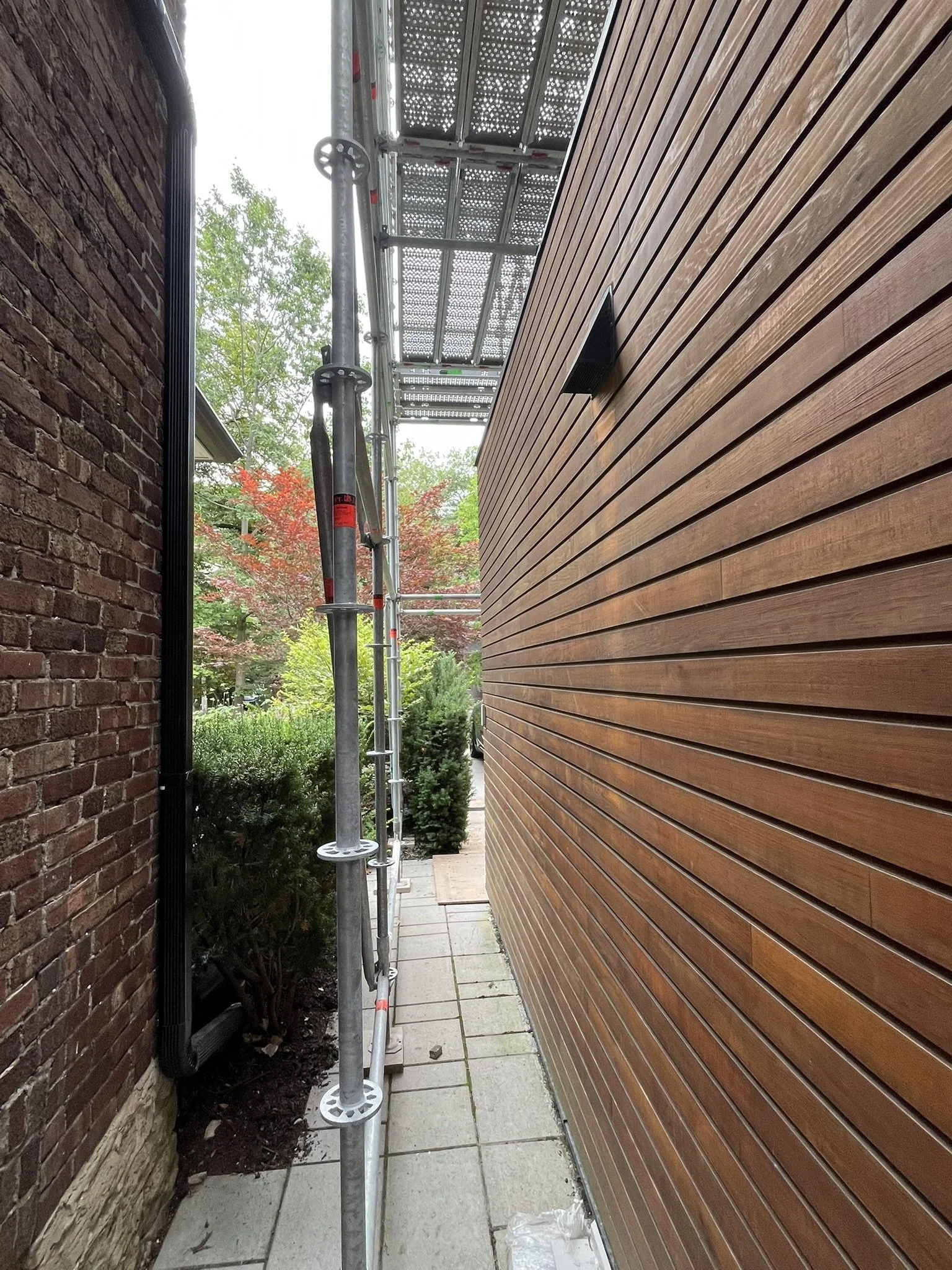
Scaffolding falls under the City of Toronto’s bylaws for right of entry for repairs and renovations to your own property. Access is permitted for safe entry to a site for necessary repairs or work. As of March 2023, right of entry permits are no longer available, but your neighbour must receive written notice at least 24 hours in advance. Scaffolding falls under this category of safe access, and thus may be installed on a neighbouring property or crossing a property line if there is insufficient space on the property that is under construction. Other equipment may not be stored on your neighbour’s property under right of access bylaws.
If your neighbour disagrees with the site access, the city offers dispute resolution services to neighbours. The neighbouring property must be returned to the original condition when work is complete.
Right of entry permits may be required in other Ontario municipalities; some communities, such as Oakville, Kitchener, Vaughan, Brampton, and Mississauga, have similar access policies to Toronto. However, there is typically wider spacing between lots in these municipalities.
OHSA Scaffold Regulations in Ontario
Your scaffold installation must meet all standards for Ontario OHSA regulations, engineering requirements, building permits, and right of entry permits if necessary.
System scaffolding taller than 15 metres (50 feet), or tube and clamp scaffolding above 10 metres (32 feet), needs to be approved and stamped by an engineer.
OHSA regulations:
Load capacity for scaffolds in Ontario: Scaffolds must support 4x the intended load
Foundation: Scaffolding must be built on solid ground, using base plates and mud sills
Scaffold height to base ratio: The ratio cannot exceed 3:1 unless the scaffold is tied in to the building
Guardrails: Guardrails must be installed on any platform where a worker is working at a height of 2.4m (8 ft) or more
Access: A ladder or stairs must be provided for workers to access the scaffold
Inspection: The scaffold must be inspected by a qualified person before use and tagged
Scaffolding Permit Summary
While some scaffold installations in Ontario may require a permit, most will not. The exception tends to be mainly commercial jobs or those on major streets. Toronto scaffold installations do not require right of entry permits from neighbouring properties, but do require advance notice to the neighbour(s) affected. All scaffolding is subject to the requirements for Ontario construction for engineering and OHSA.
Hiring a reliable scaffolding installation company will ensure you work with someone educated in safe scaffold installation and bylaw requirements. If you need a partner in safe site access, contact Johnson Playfair for a quote.
